Halloween’s Irish Roots: From Samhain to Today
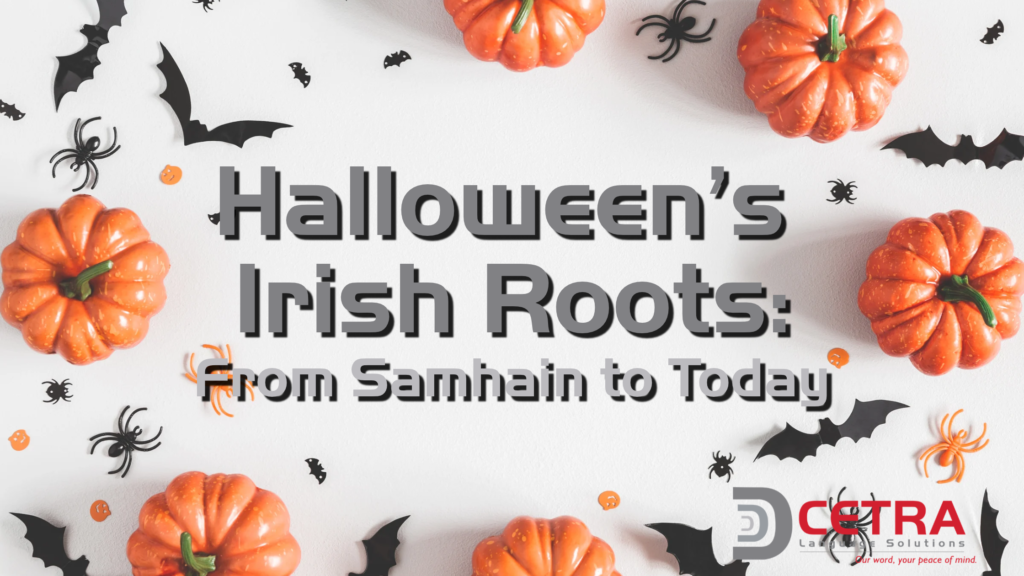
Happy Halloween from CETRA! Every October 31, people around the world celebrate with costumes, candy, carved pumpkins, and spooky festivities. But did you know that many of these traditions trace their roots back more than 2,000 years to Ireland?
Halloween has a fascinating history shaped by ancient Celtic customs, Irish folklore, and religious traditions. As a global language services provider with an office in Limerick, Ireland, CETRA is excited to explore the Irish heritage behind this beloved holiday.
Long before Halloween became a night of trick-or-treating, it was connected to Samhain (pronounced “sow-in”), an ancient Celtic festival marking the end of the harvest season and the beginning of winter. Celebrated around November 1, Samhain represented the transition from the lighter half of the year to the darker months ahead. Communities gathered to mark the seasonal change and prepare for winter.
Samhain was also surrounded by spiritual beliefs and folklore. People believed that the boundary between the living world and the supernatural was thinner at this time of year, allowing spirits and the souls of the dead to return. Bonfires, disguises, and protective customs became part of the celebrations. These traditions helped lay the groundwork for some of the Halloween customs we recognize today.
The holiday evolved over centuries as Celtic traditions blended with Christian observances. November 1 became associated with All Saints’ Day, also known as All Hallows’ Day, while the evening before became known as All Hallows’ Eve. Over time, this name evolved into Halloween. The National Museum of Ireland’s guide to Halloween and Samhain explains the connection between the ancient seasonal festival and the name used today.
Many familiar Halloween customs also have connections to Ireland. Before pumpkins became the iconic decorations we know today, people in Ireland carved frightening faces into turnips and placed lights inside them. When Irish immigrants brought their Halloween traditions to North America, pumpkins eventually replaced turnips because they were more readily available and easier to carve.
Costumes and trick-or-treating also have historical connections to older customs. In Ireland, people dressed in disguises and visited homes as part of seasonal celebrations. Traditions involving food and offerings also influenced later practices. Over time, these customs developed into the familiar Halloween activities enjoyed by children and adults today.
Halloween celebrations in Ireland continue to reflect this rich cultural heritage. Traditional foods, storytelling, games, bonfires, and community festivals keep elements of the country’s folklore alive. One traditional Irish Halloween treat is barmbrack, a fruit bread historically associated with fortune-telling games. Objects baked inside the bread were believed to offer clues about a person’s future.
Today, Halloween is celebrated in many countries, although customs and traditions vary from culture to culture. In some places, the holiday centers on costumes and candy; in others, it coincides with traditions that honor deceased loved ones or celebrate the changing seasons. These differences are a reminder of how cultural practices travel, evolve, and take on new meanings over time.
At CETRA, we work with languages and cultures around the world, helping people understand one another through translation, interpretation, and other language services. Holidays like Halloween offer a fun opportunity to explore the history, traditions, and cultural influences that connect communities across borders.
Whether you’re carving pumpkins, sharing a traditional Irish treat, telling ghost stories, or heading out for trick-or-treating, we hope you have a wonderful Halloween!
Happy Halloween from everyone at CETRA!